⚠️For informational purposes only. Do not consume, handle, or apply any plant for medical purposes based on this profile alone. Always consult a qualified expert. Poison Control: 1-800-222-1222. Full disclaimer →
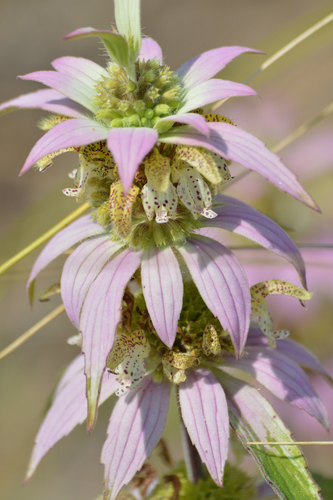
Spotted Horsemint
📚 Monarda punctata
📍 Eastern and central North America, from Ontario and New York south to Florida and west to Texas and Minnesota
Spotted Horsemint is a striking native perennial with showy, tiered whorls of purple-spotted yellow flowers. Its aromatic leaves release a scent reminiscent of thyme and oregano. T…
Spotted Horsemint is a striking native perennial with showy, tiered whorls of purple-spotted yellow flowers. Its aromatic leaves release a scent reminiscent of thyme and oregano. This tough plant thrives in poor, sandy soils and is a magnet for pollinators.
💚Health & Benefits
✓ Edible✓ Medicinal🐝 Pollinator Friendly☀️ Drought Tolerant✓ Safe for Humans🐾 Pet Safe
Excellent for low-maintenance, drought-tolerant gardens and pollinator habitats. Its deep taproot helps stabilize sandy soils, and its long bloom period supports bees and butterfli…
Excellent for low-maintenance, drought-tolerant gardens and pollinator habitats. Its deep taproot helps stabilize sandy soils, and its long bloom period supports bees and butterflies from summer into fall.
🛡️Harmful or Dangerous
Edible in moderation; essential oils may cause skin irritation in sensitive individuals if handled excessively.
📖Known Uses
Traditionally used as a diaphoretic and carminative; tea from leaves and flowers was used for colds, fevers, and digestive issues. Contains thymol, a natural antiseptic.
Full sun to partial shade; moderate watering, allow soil to dry between waterings; well-drained sandy or loamy soil; tolerates heat and humidity, hardy to -30°F
✂️ Propagation
Easily propagated by seed (cold stratification improves germination) or by division in spring. Stem cuttings can also root in moist sand.
⚖️Known Legal Restrictions
✓ No specific legal restrictions on record
Always verify with your local extension office or county regulations before planting, harvesting, or selling any plant commercially. Rules vary by state and municipality.